
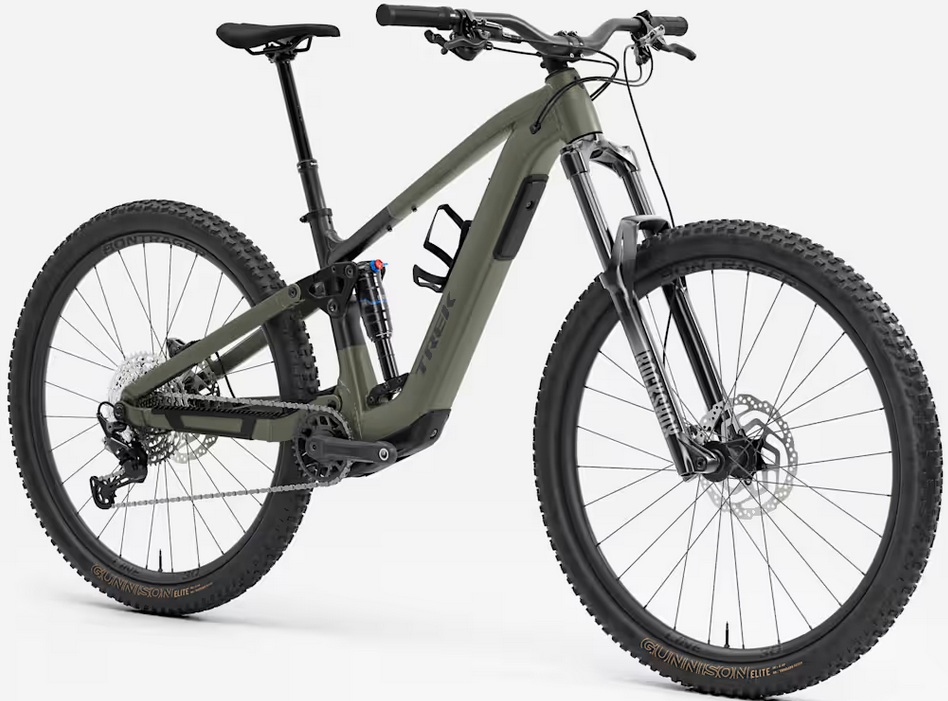
TQ HPR60 motor, 580Wh battery, and an alloy frame: our review of the 2026 Trek Fuel+ EX 5 Gen 2. Is aluminum actually better than carbon?
⚡ THE QUICK TAKE (For those in a rush)
The Smart Choice: The high-performance alloy frame inherits the exact geometries and suspension layouts of its carbon siblings while slashing the price tag.
The Silent Heart: Powered by the ultra-quiet TQ HPR60 motor (60 Nm) paired with a generous 580Wh battery that kills range anxiety.
The Verdict: Weighs around 21.9 kg and lacks full-power brute force, but it shreds descents like a normal trail bike and offers unbeatable value.
In the polarized world of e-mountain bikes, riders usually face a stark choice: heavy, full-power "full-fat" rigs with 80+ Nm motors, or insanely expensive light e-bikes that cost as much as a used car. With the new Trek Fuel+ EX 5 Gen 2 (2026)—the evolution of the lineage formerly known as Fuel EXe—Trek completely shakes up the board by offering an alloy-framed light e-MTB at an accessible entry price.
Does skipping carbon fiber mean a compromise you'll regret on the trail, or is this the ultimate budget-smart ripper? We put it to the test.
1. Alloy vs. Carbon: The "Wasted Money" Myth
The first major reality check when examining the Fuel+ EX 5 Gen 2 is that structural and geometric performance does not take a backseat to the high-end OCLV carbon models.
On-Trail Behavior: The Alpha aluminum frame faithfully replicates the progressive 2026 geometry. The scale stops at roughly 21.9 kg (48.3 lbs)—a totally respectable figure for a mid-travel full suspension.
Durability & Peace of Mind: While carbon can induce a heart attack upon the first direct rock strike, aluminum offers unbeatable psychological and structural robustness for harsh alpine terrain.
2. The TQ HPR60 Motor and the 580Wh Battery
The true generational leap lies in the electrical system, designed to fix the historic Achilles' heel of light e-bikes: limited battery life.
The TQ HPR60 Motor: An evolution of the proven HPR50, it now outputs 60 Nm of torque. It won’t rip your arms off like a heavy enduro motor, but it delivers an exceptionally natural, friction-free pedal feel.
The 580Wh Battery: Range anxiety is officially a thing of the past. By managing intermediate assist modes smartly, clearing 100+ km (60+ miles) of rolling and mountainous terrain is finally achievable without needing external range extenders.
3. How It Rides: Treat It Like a Normal Mountain Bike
Handling dynamics are the crowning achievement here, engineered to replicate the playful feel of an acoustic trail bike.
Climbing: The TQ assist supports your effort without detaching you from the physical workout. If you run out of battery (an annoying scenario with a ~22 kg bike), the internal harmonic pin-ring transmission creates zero mechanical drag.
Descending: Smooth suspension (150mm front / 145mm rear), a low center of gravity, and rock-solid stability make it a scalpel through tight corners and high-speed lines.
The Unfiltered Cyclonline Verdict: Is It Worth Buying?
"The Trek Fuel+ EX 5 Gen 2 (2026) proves you don't need to drop 10 grand on carbon to get a top-tier light e-MTB. It's slightly heavier, but it delivers stellar handling, real-world battery range, and a hyper-natural motor. If you want the pure feel of an acoustic bike with a helping hand on the steep climbs, it has very few rivals at this price point."