
Best Gravel Tires Summer 2026: Technical Selection Guide
Which gravel tires should you choose for hot weather and dry summer terrain? Technical analysis of the best fast-rolling models, compounds, and pressure management.
Best Gravel Tires Summer 2026: Selection Guide
Introduction to Offers
Choosing the best summer gravel tire is not just a matter of puncture protection; it depends on precise parameters of rolling resistance coefficient ($C_{rr}$) and grip transition. When ground temperatures exceed 35°C, the off-road surface transforms, presenting loose topsoil, fine sand, and loose pebbles (hardpack with loose gravel). Choosing an unsuitable tire causes wattage loss due to structural slippage or compound hysteresis.
A high-performance summer gravel tire must balance two opposing physical forces: reducing rolling resistance in a straight line and ensuring controlled deformation of the side knobs when cornering. The latest generation models utilize semi-slick designs or dense center micro-knobs, optimized with graphene-based compounds or advanced synthetic polymers that stabilize rubber behavior as operating temperatures rise.
Comparative Analysis: Compound Technology and Dry Terrain Management
All-road tire manufacturers divide their ranges into Pure Slick/Semi-Slick structures (fast, low-resistance, but limited on mud and steep loose gradients) and Knobby structures (deep tread, ideal for winter and high-mountain terrain). Top-tier summer models combine both worlds by utilizing a supple high-TPI (Threads Per Inch) casing paired with a differentiated profile between the center tread and the shoulder.
Excluding purely commercial claims, the efficiency of a summer gravel tire is measured by analyzing casing deformation under dynamic load and resistance to sharp object penetration, without the anti-puncture protection layer (such as Kevlar or high-density Nylon) overly stiffening the tire and increasing rolling resistance.
Technical Benchmarks of Top-Tier Summer Gravel Tires
The following data represents the engineering benchmarks of market-leading models for rolling efficiency and stability on dry terrain:
Minimum recommended casing density: 120 TPI to optimize structural flexibility.
Reference nominal width for summer: 40 mm - 42 mm to balance air volume and contact patch.
Maximum center knob height: 1.0 mm - 1.5 mm to minimize rolling friction.
Average Tubeless operating pressure (75 kg rider): 2.2 bar - 2.6 bar front / 2.4 bar - 2.8 bar rear.
Average routine maintenance requirement: Replacing liquid sealant every 3 - 4 months due to summer thermal evaporation.
Best Fast-Rolling Gravel Tire Models
Schwalbe G-One RS: The King of Rolling Efficiency
The benchmark model for summer gravel racing features a center tread with an oriented scale design derived from dry-terrain cyclocross tires. The Super Race casing structure ensures high structural flexibility, reducing rolling resistance by 20% compared to the Bite version. More pronounced side knobs provide a distinct anchor point when the bike is leaned into corners on hardpack surfaces.
Pirelli Cinturato Gravel H: The Hardpack Compromise
A classic piece of materials engineering applied to two wheels, optimized for hard and compact terrain. It utilizes the SpeedGRIP Compound, formulated to resist abrasion generated by hot, sharp stones. The tread pattern is very low and tightly spaced, ensuring a continuous contact patch that reduces induced vibrations and maximizes power transfer when pedaling on flat sections.
Maxxis Rambler 120 TPI SilkShield: Safety and Traction
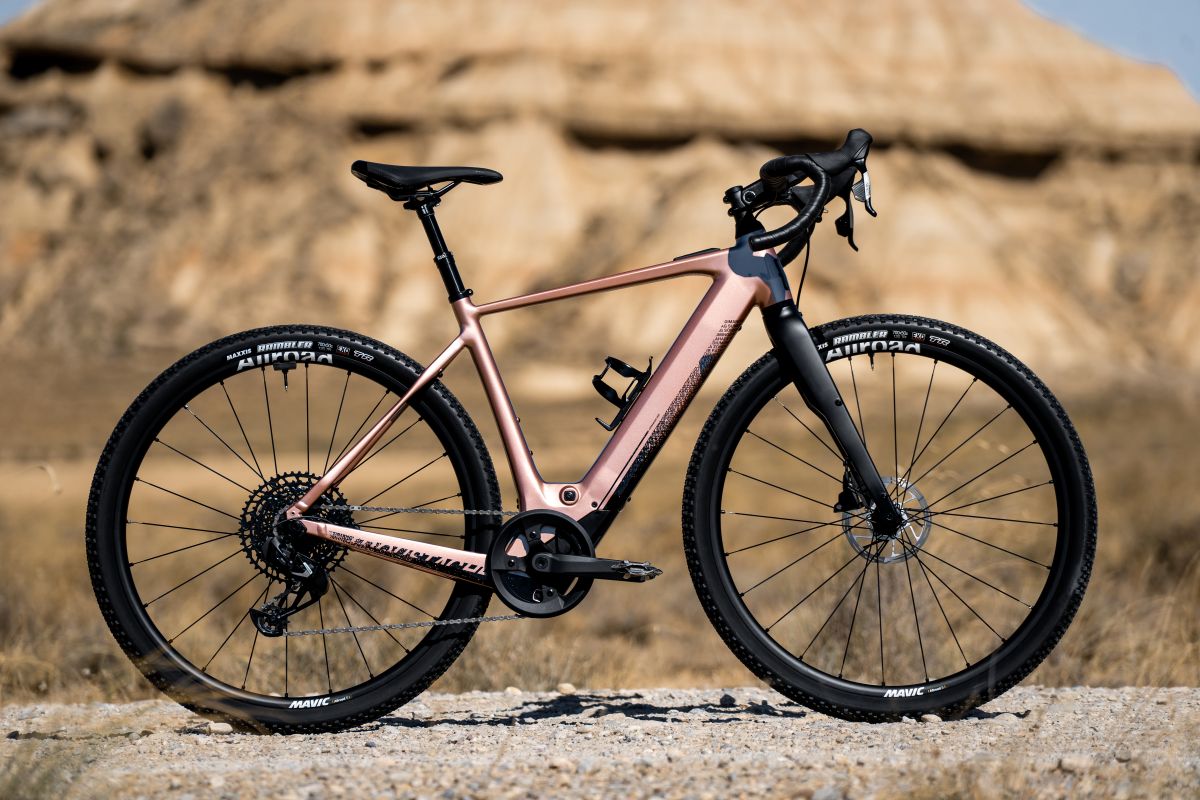
Characterized by a proven geometric design, this tire relies on variable knob density. The center section is tightly packed to eliminate acoustic or mechanical drag on asphalt, while the intermediate blocks provide the necessary traction when tackling unpaved climbs with gradients exceeding 12%. The SilkShield layer delivers bead-to-bead protection against sidewall cuts caused by sharp rocks.
Buyer's Advice: Selecting Width and Verifying Technical Details
To optimize your purchase and ensure maximum dynamic performance from your gravel tires, it is vital to analyze specific technical details during selection:
Localized puncture protection systems: For summer riding, it is preferable to choose protection layers positioned exclusively under the tread (sub-tread) rather than dual-layer structures across the entire casing, which would increase rubber hysteresis and waste precious watts.
Hookless Compatibility: Verify that the tire bead is certified (Tubeless Ready - TLR) for use on hookless rims, a standard widely found in the latest generation carbon wheels. Hookless rims impose a strict operating pressure limit of 5.0 bar, which must never be exceeded.
Air volume and actual width: Measure the actual width of the tire using a caliper once it is seated on your specific rim. A 25 mm internal rim width will tend to stretch a 40 mm nominal tire up to 42 mm in reality, modifying the available frame clearance.
Find the Best Deals on Summer Gravel Tires
Use the search box below to compare real-time prices, find active discounts, promotions, and stock availability for the best fast-rolling gravel tire models: